
Dog Food Calculator
How to Use the Dog Food Calculator
Enter your dog's weight
Add your dog's current weight and choose pounds (lb) or kilograms (kg). Accurate weight information helps calculate a more useful daily calorie estimate.
Choose your dog's life stage and activity
Select the option that best describes your dog, such as a neutered adult or an active dog. Energy requirements vary depending on growth, activity and individual needs.
Enter food calories and calculate
Check the food packaging for calories per cup, enter the number of meals per day, and calculate an estimated daily food portion and meal size.
How to Use the Dog Food Calculator
Enter your dog's weight
Add your dog's current weight and choose pounds (lb) or kilograms (kg). Accurate weight information helps calculate a more useful daily calorie estimate.
Choose your dog's life stage and activity
Select the option that best describes your dog, such as a neutered adult or an active dog. Energy requirements vary depending on growth, activity and individual needs.
Enter food calories and calculate
Check the food packaging for calories per cup, enter the number of meals per day, and calculate an estimated daily food portion and meal size.
How Much Food Should You Feed Your Dog Each Day?
Finding the right amount of food for your dog isn’t always as simple as following the serving suggestions on a food bag. Every dog has different energy needs depending on their weight, age, activity level and health.
A small, relaxed companion dog may require far fewer calories than a larger, highly active dog. Even two dogs of the same weight may need different portions.
The Wagmellow Dog Food Calculator helps you estimate your dog’s daily calorie needs and convert them into practical food portions based on the calories listed on your chosen dog food.
How does the Dog Food Calculator work?
The calculator starts by estimating your dog’s Resting Energy Requirement (RER), which represents the energy needed for basic bodily functions at rest.
The commonly used veterinary formula is:
RER (kcal/day) = 70 × (Body weight in kg ^ 0.75)
An appropriate life-stage or activity factor is then used to estimate daily energy needs. These factors are starting points and may require adjustment for individual dogs.
To calculate daily food portions:
Cups per day = Daily calorie target ÷ Calories per cup (kcal/cup)
Example:
For a dog with an estimated daily calorie target of 900 kcal, eating food containing 360 kcal per cup:
900 ÷ 360 = 2.5 cups per day
If the dog eats twice daily:
2.5 ÷ 2 = 1.25 cups per meal
Important: These calculations provide estimated starting amounts. Actual nutritional needs depend on your dog’s health, body condition, life stage and activity level.
Reference: Merck Veterinary Manual — Nutritional Requirements of Small Animals.
Helpful tip
Always use the calorie information from your dog’s actual food packaging. Different brands and recipes can contain very different amounts of energy per cup.
Why Your Dog's Feeding Needs Matter
Small Dogs
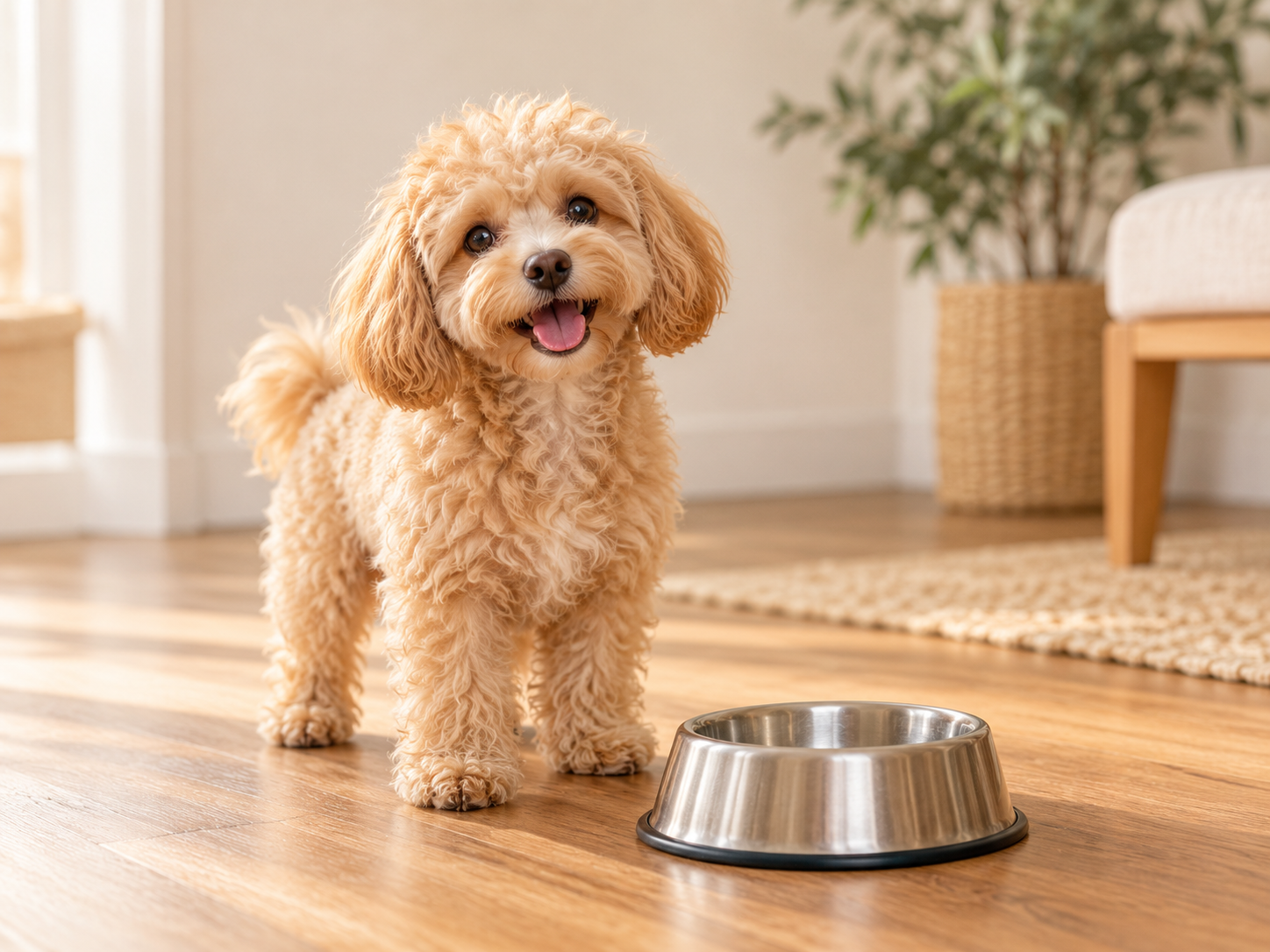
Small dogs need carefully measured portions. Although they eat less food overall, their calorie requirements per kilogram can be relatively high.
Large & Active Dogs
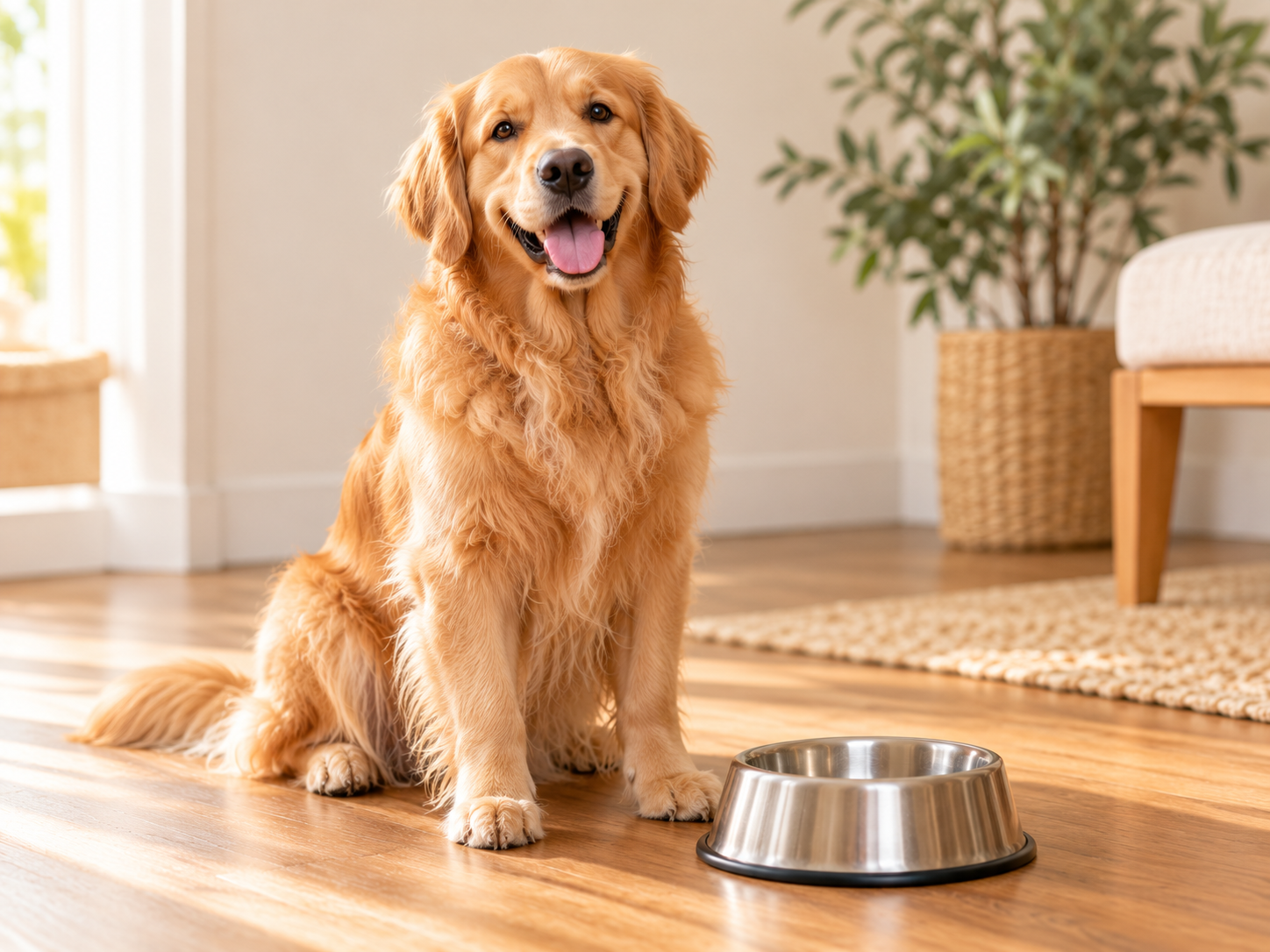
Larger dogs generally need more total calories, while activity level and body condition can significantly influence their daily requirements.
Understanding Your Dog’s Life Stage
Your dog’s nutritional needs change throughout life. A suitable feeding plan should account for their growth, activity, body condition and individual health.
Puppies: Growing puppies need appropriately balanced nutrition to support their development. Feeding amounts and schedules change as they mature.
Adult dogs: Daily portions should help maintain a healthy weight while supporting normal activity and overall wellbeing.
Active dogs: Dogs that regularly run, hike or perform demanding work may need additional calories to meet their energy requirements.
Senior dogs: Calorie needs vary with muscle condition, activity and health. Older dogs do not automatically need less food.
How Many Times a Day Should You Feed Your Dog?
Many healthy adult dogs do well with two meals per day, although feeding frequency can vary based on their age, health and daily routine.
Puppies typically require more frequent meals, especially during their early months.
Your Wagmellow calculator divides the estimated daily portion by the number of meals selected, making it easier to plan a consistent feeding schedule.
Why Body Condition Matters More Than Portion Size Alone
Even a carefully calculated portion may need adjustments over time.
A dog’s ideal feeding amount is influenced by whether they are underweight, overweight or maintaining a healthy body condition.
Regularly monitor your dog’s weight and body condition. As a general guide, treats and additional snacks should account for no more than approximately 10% of daily calories, so they don’t displace too much complete and balanced food.
For dogs requiring weight loss, therapeutic feeding, or nutritional support for medical conditions, ask your veterinarian for an individual plan.
Frequently Asked Questions
How much food should I feed my dog per day?
The amount depends on your dog’s weight, life stage, activity level and the calorie content of their food. Use the Wagmellow Dog Food Calculator to estimate a starting daily portion, then monitor body condition and adjust with veterinary guidance.
How many cups of dog food should my dog eat?
Divide your dog’s estimated daily calorie requirement by the calories per cup listed on the dog food packaging. For example, 900 kcal per day divided by 360 kcal per cup equals 2.5 cups daily.
How do I calculate my dog's daily calorie needs?
A common starting method calculates resting energy requirements using 70 × body weight in kg raised to the power of 0.75. An appropriate life-stage or activity factor is then applied to estimate daily calorie needs.
Should I feed my dog once or twice a day?
Many healthy adult dogs do well with two meals daily. Puppies may need more frequent meals, and dogs with certain health conditions may require a different schedule. Ask your veterinarian if you’re unsure.
Do puppies need more food than adult dogs?
Growing puppies generally require more energy relative to their body weight. They also need a nutritionally appropriate growth diet. Large-breed puppies have particular nutritional considerations, so consult your veterinarian about suitable feeding amounts.
What should I do if my dog is gaining or losing weight?
Review their total calorie intake, including treats, and monitor their body condition. Unexpected weight changes or ongoing difficulty maintaining a healthy weight should be discussed with a veterinarian before making major dietary changes.